Cyber Security

Why Automated Vulnerability Scans Are Not Enough: The Business Value of Manual Penetration Testing

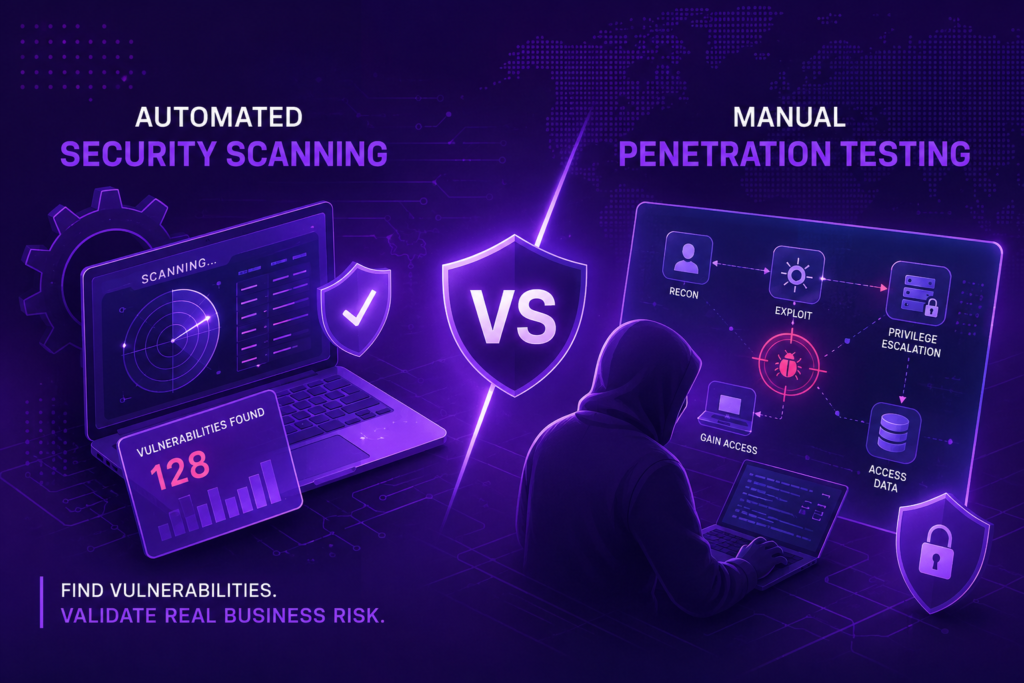
Why Automated Vulnerability Scans Are Not Enough: The Business Value of Manual Penetration Testing Your Security Dashboard Looks Green. So Why Do Organizations Still Experience Breaches? Many organizations invest in vulnerability scanners, endpoint security platforms, SIEM solutions, and automated security monitoring. Weekly reports show hundreds of vulnerabilities detected, dashboards indicate high compliance scores, and security teams receive automated alerts. Everything appears under control. Yet organizations with mature security programs continue to experience ransomware attacks, data breaches, API compromises, and unauthorized access incidents. The question leadership should ask is not: “Do we have security tools?” The better question is: “Do we truly understand how an attacker would exploit our environment?” That difference separates automated security scanning from manual penetration testing. While one identifies known weaknesses, the other validates how those weaknesses can become real business risks. Automated security scanning identifies known vulnerabilities across systems using predefined signatures and rules. Manual penetration testing goes further by simulating real-world attacks, validating exploitability, and uncovering business logic flaws, privilege escalation paths, and attack chains that automated tools frequently miss. Organizations seeking meaningful cybersecurity resilience should view these approaches as complementary rather than interchangeable. Why This Matters More Than Ever in 2026 Enterprise environments have changed dramatically. Applications communicate through APIs, cloud workloads scale dynamically, remote employees access critical systems from multiple locations, and third-party integrations expand attack surfaces daily. As infrastructure becomes more complex, attackers increasingly exploit combinations of seemingly low-risk vulnerabilities rather than a single critical flaw. Doing a comprehensive cybersecurity risk assessment is key. Unfortunately, automated scanners evaluate vulnerabilities individually. Attackers do not. The Biggest Misconception in Enterprise Cybersecurity One of the most common assumptions organizations make is: “If our vulnerability scanner doesn’t report critical findings, we must be secure.” This assumption creates dangerous blind spots. Automated tools are excellent at identifying known technical vulnerabilities. They are far less effective at understanding: Business workflows User behavior Authorization weaknesses Chained attack scenarios Logic manipulation Contextual risk At Lumiverse Solutions, one recurring finding during security assessments is that organizations often prioritize vulnerability counts instead of business impact. A report showing 300 low-risk vulnerabilities may receive immediate attention, while a single privilege escalation flaw capable of exposing sensitive customer data remains unnoticed. Security maturity is measured by understanding risk not simply counting vulnerabilities. Understanding Automated Security Scanning Automated security scanners systematically evaluate infrastructure, applications, endpoints, and networks for known weaknesses. They are valuable because they provide: Continuous visibility Fast vulnerability identification Large-scale coverage Compliance support Commonly identified issues include: Missing patches Weak configurations Outdated software Known CVEs SSL/TLS weaknesses Open ports For operational security, automated scanning is essential. But it has limitations. What Automated Security Scanning Cannot Tell You Automated tools rarely understand how applications actually function. They cannot reliably identify: Business Logic Abuse Example: An attacker bypasses payment verification without exploiting a technical vulnerability. Multi-Step Attack Chains Example: A low-risk misconfiguration linked with weak authentication, leading to privilege escalation, which ultimately exposes sensitive corporate data. Individually, each issue appears harmless. Combined, they become critical. Contextual Business Risk Automated tools may classify a vulnerability as “Medium.” However, for your specific business, that vulnerability may directly expose customer records, financial transactions, or intellectual property. Business context changes risk. Automation rarely understands that. Why Manual Penetration Testing Delivers Different Insights Manual penetration testing approaches systems the same way attackers do. Security professionals actively attempt to: Escalate privileges Abuse workflows Chain vulnerabilities Bypass authentication Exploit APIs Access restricted resources Instead of asking: “Does a vulnerability exist?” penetration testers ask: “Can this vulnerability actually compromise the business?” That shift changes everything. What Most Organizations Overlook Many organizations purchase vulnerability scanners believing they have replaced penetration testing. They haven’t. Scanning identifies weaknesses. Penetration testing validates risk. Those objectives are fundamentally different. Thought Leadership Perspective Security tools generate visibility. Experienced security professionals generate understanding. The strongest cybersecurity programs combine both. Automated Security Scanning vs Manual Penetration Testing Area Automated Scanning Manual Penetration Testing Speed Excellent Moderate Coverage Broad Targeted Known Vulnerabilities Excellent Excellent Business Logic Testing Limited Extensive API Abuse Testing Limited Strong Privilege Escalation Limited Strong Attack Chain Simulation No Yes Business Context Minimal High Risk Validation No Yes Strategic Recommendations Limited Comprehensive Why Compliance Alone Is Not Enough Organizations often conduct vulnerability scans because ISO 27001 requires risk management, SOC 2 expects testing, DPDP emphasizes security controls, or customer contracts require assessments. Compliance is important, but compliance does not always reveal exploitability. Passing an audit demonstrates control alignment; manual penetration testing demonstrates control effectiveness. There is a significant difference. Questions Leadership Should Ask Before relying solely on automated security reports, leadership should ask: Have critical findings been manually validated? Can vulnerabilities actually be exploited? Are APIs independently tested? Have business workflows been assessed? Can attackers move laterally across systems? Which risks create the greatest business impact? A Practical Enterprise Security Assessment Framework Assessment Area Key Question Asset Visibility Do we know what exists? Vulnerability Discovery Have known risks been identified? Exploit Validation Can weaknesses actually be exploited? Business Logic Review Can workflows be abused? API Security Are integrations secure? Privilege Management Can access be escalated? Remediation Are findings prioritized by business impact? Organizations that evaluate all seven areas generally achieve stronger security maturity than those relying on automated scanning alone. Enterprise Security Checklist Automated vulnerability scanning completed Manual penetration testing performed APIs independently assessed Authentication validated Authorization tested Business logic reviewed Cloud configurations verified Remediation prioritized Findings revalidated Expert Takeaways Organizations rarely experience breaches because they lacked security tools. They experience breaches because critical risks remained misunderstood. Automation provides scale, while human expertise provides context. Automation identifies weaknesses, while manual testing validates exposure. Neither replaces the other. The most resilient organizations integrate both into a continuous security program rather than treating security assessments as annual compliance exercises. Conclusion Automated security scanning remains an essential component of modern cybersecurity. But visibility alone does not reduce risk. Understanding how attackers think, how vulnerabilities interact, and how business processes can be abused requires human expertise. Organizations that combine automated scanning with
Why Automated Vulnerability Scans Are Not Enough: The Business Value of Manual Penetration Testing Read More »

Security Gaps

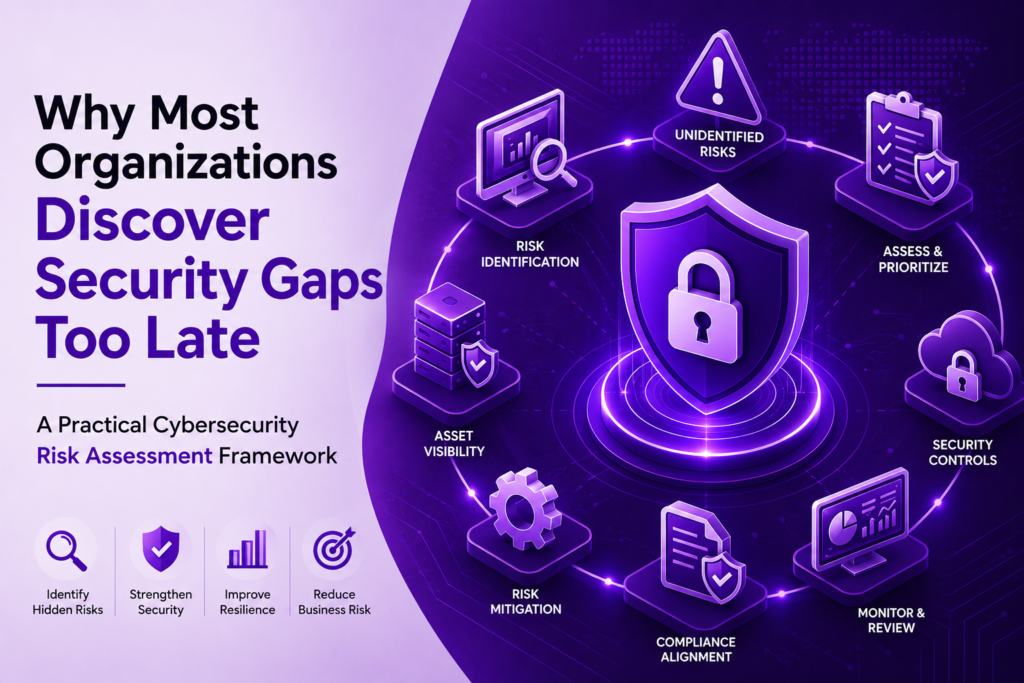
Why Most Organizations Discover Security Gaps Too Late: A Practical Cybersecurity Risk Assessment

Why Most Organizations Discover Security Gaps Too Late: A Practical Cybersecurity Risk Assessment The Most Expensive Security Risks Are Often the Ones Nobody Knows Exist Most organizations don’t ignore cybersecurity. They invest in firewalls. Deploy endpoint protection. Conduct compliance reviews. Implement security policies. Yet breaches, ransomware incidents, compliance failures, and operational disruptions continue to occur. Why? Because many organizations focus on known risks while remaining unaware of hidden ones. In cybersecurity, the most dangerous vulnerabilities are rarely the ones already documented. The greatest risk often comes from security gaps that remain invisible until a security incident, compliance audit, customer complaint, or business disruption exposes them. By then, the cost of remediation is significantly higher. This is why cybersecurity risk assessments have evolved from a compliance exercise into a strategic business necessity. The objective is no longer simply identifying vulnerabilities. The objective is understanding where business risk exists before attackers, regulators, or customers discover it first. A Cybersecurity Risk Assessment helps organizations identify, evaluate, and prioritize security risks that could impact operations, customer trust, compliance obligations, and business continuity. Rather than focusing solely on technical vulnerabilities, a mature risk assessment evaluates how security weaknesses translate into real-world business exposure. Why Cybersecurity Risk Assessments Matter More in 2026 The modern enterprise environment is significantly more complex than it was even a few years ago. Organizations now operate across: Cloud platforms Hybrid infrastructure SaaS applications Remote work environments Third-party vendors APIs and integrations Every new digital initiative creates opportunity. It also creates risk. The challenge is that cybersecurity environments evolve much faster than traditional risk management processes. A control that was effective last year may no longer provide sufficient protection today. One of the biggest misconceptions in cybersecurity is assuming risk remains static. In reality, cyber risk is constantly changing because technology, threat actors, business processes, and attack surfaces continuously evolve. Organizations that assess risk once a year often underestimate how much their environment changes between assessments. Why Organizations Often Discover Security Gaps Too Late Most security incidents are not caused by a complete absence of security controls. They occur because organizations fail to recognize how risks accumulate across systems, people, processes, and technologies. At Lumiverse Solutions, one recurring challenge we observe during assessments is that organizations often have security tools in place but lack visibility into how those tools, systems, and processes interact. This creates hidden exposure that is difficult to detect without a structured risk assessment. What Most Organizations Overlook When leaders think about cybersecurity risk, they often focus on obvious threats: Malware Ransomware Data breaches While important, these are often symptoms rather than root causes. The underlying risks frequently include: Incomplete Asset Visibility Unknown assets cannot be protected. Excessive User Access Too many privileges create unnecessary exposure. Third-Party Dependencies Vendor weaknesses often become organizational risks. Unpatched Systems Known vulnerabilities remain exploitable. Misconfigured Cloud Environments Small configuration errors can create significant exposure. These issues rarely make headlines until something goes wrong. The Hidden Cost of Delayed Risk Discovery Many organizations evaluate cybersecurity primarily from a technical perspective. However, security gaps create broader business consequences. Operational Impact Security incidents disrupt business operations. Examples include: Application outages Service interruptions Productivity losses Compliance Impact Undiscovered risks can lead to: Audit findings Regulatory scrutiny Compliance violations Particularly under frameworks such as: ISO 27001 DPDP SOC 2 PCI DSS HIPAA Customer Trust Impact Trust is difficult to build and easy to lose. A single security incident can affect: Customer retention Vendor confidence Brand reputation Financial Impact Delayed risk identification often results in: Emergency remediation costs Legal expenses Operational recovery expenses Revenue loss The longer risks remain undiscovered, the more expensive they typically become. Common Misconceptions About Cybersecurity Risk Assessments Misconception #1 “We Passed Compliance, So We Must Be Secure” Compliance helps establish controls. It does not guarantee resilience against real-world threats. Misconception #2 “Our Security Tools Will Alert Us” Security tools generate visibility. They do not automatically eliminate risk. Misconception #3 “We Conduct Vulnerability Scans” Risk assessments evaluate broader business exposure beyond technical vulnerabilities. Misconception #4 “Nothing Has Happened Yet” Many organizations mistake the absence of incidents for the absence of risk. Those are not the same thing. Why Traditional Security Approaches Often Fail Traditional security programs often focus on individual controls. Risk assessments focus on the bigger picture. Thought Leadership Insight Cybersecurity failures rarely result from a single vulnerability. They typically occur when multiple weaknesses align. For example: Weak access controls Unpatched systems Poor monitoring Third-party exposure Individually, each issue may seem manageable. Collectively, they create significant business risk. A Practical Cybersecurity Risk Assessment Framework Organizations can use the following framework to evaluate security maturity. Risk Area Key Question Asset Visibility Do we know what needs protection? Identity & Access Who can access critical systems? Vulnerability Management Are risks remediated effectively? Cloud Security Are configurations secure? Third-Party Risk Are vendors assessed? Monitoring & Detection Can threats be identified quickly? Incident Response Can we respond effectively? Compliance Alignment Are controls aligned with obligations? This framework helps organizations move beyond compliance and toward resilience. Questions Leadership Should Ask Before assuming security maturity, leadership should ask: Do we know our highest-risk assets? Which risks pose the greatest business impact? Are we assessing third-party security exposure? How quickly can we detect security incidents? Have critical controls been tested recently? Are security investments reducing measurable risk? The answers often reveal more than security dashboards. Cybersecurity Risk Assessment Checklist Organizations should regularly evaluate: Asset inventory accuracy Access control effectiveness Vulnerability management processes Cloud security posture Vendor risk exposure Security monitoring capabilities Incident response readiness Compliance obligations Backup and recovery processes Security testing effectiveness Why Mature Organizations Treat Risk Assessments Differently Less mature organizations often perform assessments because regulations require them. More mature organizations perform assessments because leadership understands that visibility reduces uncertainty. Expert Insight The strongest cybersecurity programs are not necessarily the ones with the most tools. They are the ones with the clearest understanding of where risk exists and how it affects business priorities. That clarity often begins with

Why Most Organizations Discover Security Gaps Too Late: A Practical Cybersecurity Risk Assessment Read More »

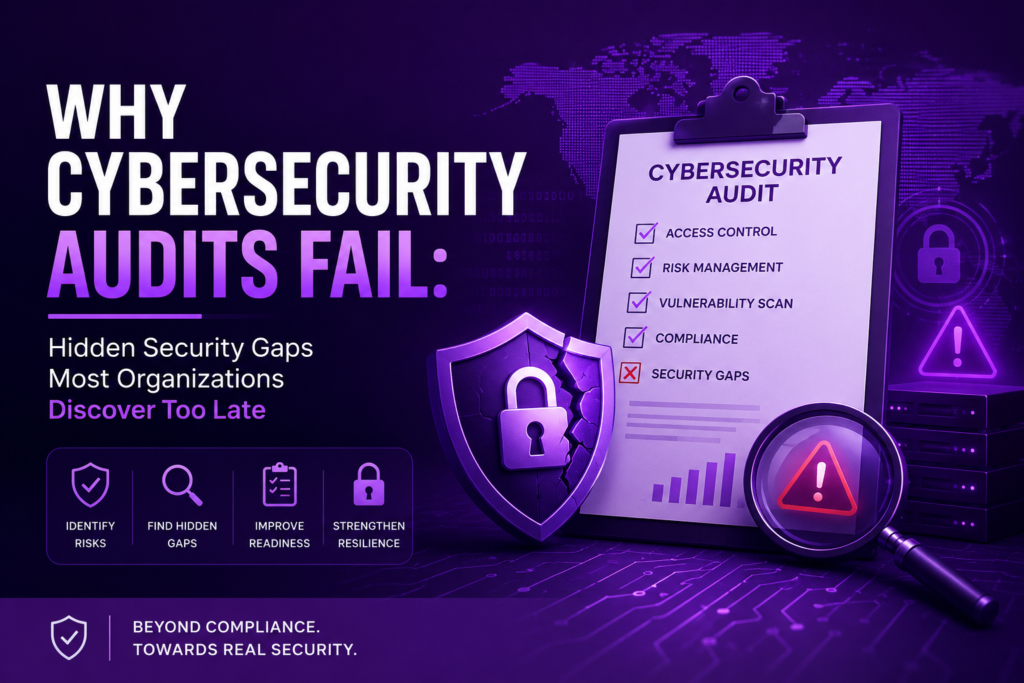
Why Cybersecurity Audits Fail: Hidden Security Gaps Most Organizations Discover Too Late

Why Cybersecurity Audits Fail: Hidden Security Gaps Most Organizations Discover Too Late Few business events create more anxiety for leadership teams than an upcoming cybersecurity audit. Weeks are spent gathering documentation. Teams rush to close findings. Policies are updated. Reports are reviewed. Security controls are re-evaluated. Yet despite these efforts, organizations continue to encounter the same uncomfortable reality: Audit findings reveal security gaps that should have been identified long before the audit began. Even more concerning, many organizations successfully pass compliance reviews and still experience security incidents months later. This raises an important question: If organizations are investing heavily in compliance and audits, why do critical security gaps continue to exist? The answer is surprisingly simple. Many organizations prepare for audits. Very few prepare for actual security resilience. That difference often determines whether an audit becomes a confidence-building exercise or an expensive wake-up call. Cybersecurity audits often fail not because organizations lack security controls, but because they focus heavily on documentation, compliance checklists, and point-in-time reviews while overlooking deeper operational, technical, and governance weaknesses. The most successful organizations treat audits as a validation process not their primary security strategy. Why Cybersecurity Audits Matter More Than Ever Today’s organizations operate in increasingly complex digital environments. Hybrid infrastructure Cloud applications Remote workforces Third-party vendors APIs and integrations Expanding attack surfaces At the same time, regulatory expectations continue to increase across industries. Organizations are expected to demonstrate security readiness through frameworks and regulations such as: ISO 27001 SOC 2 PCI DSS DPDP HIPAA RBI Security Guidelines The challenge is that modern threats evolve continuously. Audits typically evaluate a specific point in time. Attackers do not. This creates a dangerous gap between compliance status and actual security posture. Leadership Perspective Organizations that view cybersecurity audits solely as compliance requirements often miss the broader objective: strengthening operational resilience against evolving threats. An audit should confirm security maturity—not create it. The Biggest Misconception About Cybersecurity Audits One of the most common assumptions organizations make is: “If we pass the audit, we must be secure.” Unfortunately, cybersecurity does not work that way. An audit validates specific controls against a defined framework. Security is significantly broader. A compliance review may verify that policies exist, evidence is documented, and required controls are implemented. However, attackers do not target documentation. Attackers target weaknesses. This distinction is often overlooked during audit preparation. Thought Leadership Insight Passing an audit demonstrates that controls exist. It does not always demonstrate that those controls remain effective under real-world attack conditions. Security requires continuous validation, testing, monitoring, and improvement beyond compliance requirements. What Most Organizations Overlook Many security programs become heavily focused on audit preparation activities such as: Policy documentation Control mapping Evidence collection Compliance reporting Framework alignment Audit artifact preparation While these activities are important, they can create a false sense of confidence when not supported by ongoing security validation. Organizations often know which controls should exist. The challenge is determining whether those controls are actually functioning effectively during day-to-day operations. This gap frequently becomes visible during audits and assessments. Hidden Security Gaps That Cause Audit Failures Most audit findings stem from a handful of recurring weaknesses that remain hidden until formal reviews expose them. Gap #1: Asset Visibility Problems You cannot secure what you cannot see. Many organizations struggle to maintain complete visibility across rapidly evolving environments. Common examples include: Cloud assets Shadow IT systems Legacy infrastructure Development environments Temporary project resources Third-party integrations When assets remain undiscovered, they frequently become unmanaged. Unmanaged assets often become attack surfaces. Business Impact Asset visibility gaps can lead to compliance failures, vulnerability exposure, security blind spots, and increased attack opportunities. Gap #2: Access Control Weaknesses Access management remains one of the most common findings across cybersecurity audits and compliance assessments. As organizations grow, user access rights often accumulate over time. Employees change roles, contractors gain temporary access, and privileged accounts are created to support operational requirements. Without proper governance, these permissions can quickly become excessive. Common access control weaknesses include: Excessive user permissions Dormant user accounts Privileged access misuse Shared administrative credentials Incomplete access reviews Weak role-based access controls Business Impact Poor access governance increases the risk of unauthorized access, insider threats, data exposure, and regulatory violations. Many organizations discover these issues only during audits, despite the fact that they often exist for months or years beforehand. Gap #3: Vulnerability Management Gaps Most organizations conduct vulnerability scans. Far fewer organizations consistently remediate the vulnerabilities they discover. Cybersecurity audits frequently identify weaknesses in vulnerability management programs rather than a lack of scanning activity. Common challenges include: Delayed patch deployment Unclear remediation ownership Limited resource availability Poor risk prioritization Inconsistent vulnerability tracking Lack of executive visibility Organizations often assume that discovering vulnerabilities is enough. In reality, risk reduction only occurs when vulnerabilities are effectively remediated. Practical Reality A vulnerability identified but not remediated remains a vulnerability. Threat actors are not concerned with whether a weakness appears on a report. They only care whether it remains exploitable. Gap #4: Third-Party Risk Blind Spots Modern organizations rely heavily on external vendors, cloud providers, consultants, software platforms, and service providers. These third parties often process sensitive information, connect directly to business systems, or support critical business operations. Despite this reliance, vendor security reviews are frequently limited or performed only during onboarding. Common third-party risk gaps include: Insufficient vendor assessments Lack of continuous monitoring Incomplete contractual security requirements Poor visibility into vendor security practices Weak supply chain security governance Business Impact Third-party weaknesses can introduce compliance challenges, operational disruption, data exposure, and supply chain risks that directly affect the organization. As regulatory expectations increase, organizations are increasingly accountable for managing third-party security risks. Gap #5: Security Controls Exist but Are Not Tested One of the most overlooked causes of audit findings is the assumption that implemented controls automatically remain effective. Organizations frequently deploy security controls and then rarely validate them afterward. Examples include: Backup systems Incident response plans Security monitoring controls Disaster recovery procedures Access management workflows Business continuity plans Documentation may

Why Cybersecurity Audits Fail: Hidden Security Gaps Most Organizations Discover Too Late Read More »

Web Application Penetration Testing (WAPT)

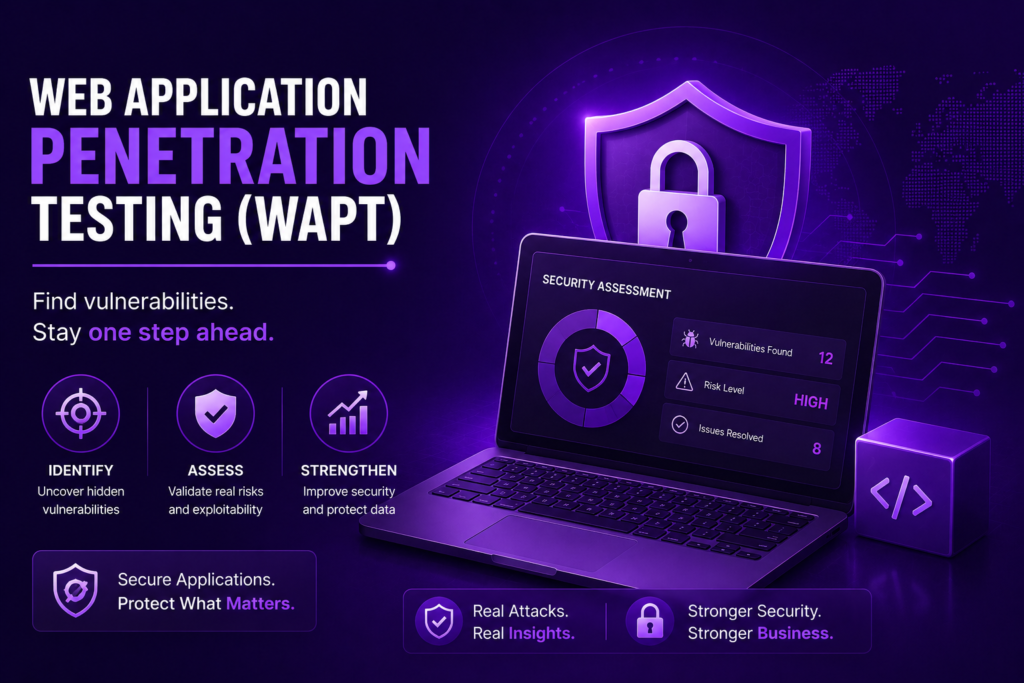
Web Application Penetration Testing (WAPT) Most Application Breaches Start Quietly A lot of companies think their web applications are safe just because they use HTTPS, set up firewalls, and periodically run vulnerability scans. But breaches still happen again and again. What’s unsettling is that application security problems often linger for months, sometimes years, before anyone notices. Most of the time these are not advanced exploits. They are basic weaknesses in authentication, session management, APIs, access controls, and business workflows. These small gaps quietly create opportunities for attackers. By the time they are discovered, customer trust has already been affected, compliance obligations become more difficult, and operational disruption increases. That is why Web Application Penetration Testing (WAPT) matters. It is not simply about identifying vulnerabilities. It is about understanding how attackers could exploit your applications before they do. Quick Summary Web Application Penetration Testing (WAPT) is a hands-on security assessment where experts simulate real-world attacks against web applications. The goal is to uncover vulnerabilities, validate exploitability, and identify security risks that automated tools often miss. If your organization handles customer information, digital transactions, APIs, SaaS platforms, or business-critical applications, WAPT helps identify weaknesses before they become costly business problems. Why Web Application Security Has Become Critical Applications are now the primary way organizations interact with customers. Customer portals SaaS platforms Mobile application backends E-commerce systems Internal business applications These applications often contain sensitive data and critical business functionality. As a result, they have become high-value targets for attackers. Traditional security controls typically focus on infrastructure. Attackers focus on applications. That gap creates risk. What Companies Often Miss A common misconception is: “If our infrastructure is secure, our application is secure.” In reality, application security is a completely different challenge. You can have a well-protected server while still hosting a vulnerable application. An application can pass compliance requirements and still contain exploitable business logic flaws. A vulnerability scanner can produce a clean report while critical risks remain hidden. These are the issues penetration testing is designed to uncover. Why Standard Security Testing Is Not Enough Many organizations rely heavily on: Automated vulnerability scans Compliance checklists Security tool outputs While useful, these approaches have limitations. Automated tools are effective at identifying known vulnerabilities but often struggle to detect: Business logic flaws Privilege escalation paths Multi-step attack chains Authentication weaknesses Authorization bypasses Real-world breaches frequently occur because attackers exploit workflows rather than technical vulnerabilities alone. Hidden Risks You Never See Coming Broken Access Control Broken Access Control remains one of the most common findings during Web Application Penetration Testing engagements. Users gain access to information, records, functions, or administrative features they should never be able to access. This often leads to: Unauthorized data exposure Privacy violations Regulatory penalties Loss of customer trust Business Impact A single authorization flaw can expose thousands of customer records and create significant compliance challenges. Authentication Weaknesses Weak authentication controls continue to be a major attack vector. Examples include: Weak password policies Session management flaws Missing account lockout controls Multi-factor authentication gaps Credential reuse vulnerabilities Attackers frequently exploit these weaknesses to compromise user accounts and gain unauthorized access. Business Impact Compromised accounts often become the starting point for larger breaches. Business Logic Vulnerabilities Business logic vulnerabilities are among the most overlooked risks in modern applications. Unlike technical vulnerabilities, these weaknesses arise from flaws in how workflows are designed. Examples include: Manipulating discount systems Bypassing approval processes Unauthorized transactions Workflow abuse Subscription manipulation Traditional security scanners rarely identify these issues. Business Impact Organizations can suffer direct financial losses and operational disruption. API Security Gaps Modern applications increasingly rely on APIs. Unfortunately, APIs frequently expose sensitive functionality and data. Common API security weaknesses include: Broken authentication Broken object level authorization Excessive data exposure Rate limiting failures Improper access controls Poorly secured APIs are responsible for many modern data breaches. Business Impact Weak API security can expose customer records, financial information, business data, and sensitive transactions. Why Passing Compliance Does Not Mean You Are Secure Organizations frequently ask: “We passed ISO 27001, SOC 2, or PCI DSS. Are we secure?” The answer is not always. Compliance frameworks provide governance and security guidance. However, compliance is not the same as security validation. Frameworks may verify that controls exist. Penetration testing verifies whether those controls can withstand real-world attacks. The most mature organizations treat compliance as a baseline rather than a destination. What Leaders Should Ask Before Choosing a WAPT Provider Selecting a penetration testing provider should involve more than comparing pricing. Leadership teams should evaluate the following: Evaluation Area Questions to Ask Testing Methodology Does the provider perform manual testing or only automated scans? Business Logic Testing Will workflows and business processes be evaluated? API Security Are APIs included within the testing scope? Remediation Support Will the provider assist with vulnerability remediation? Risk Prioritization Will findings be prioritized based on business impact? Industry Knowledge Does the provider understand your regulatory environment? How to Evaluate Your Application Security Use the following framework to assess application security maturity. Area Assessment Question Authentication Can unauthorized users gain access? Authorization Can users access restricted functionality? Data Protection Is sensitive information protected? API Security Are APIs securely configured? Business Logic Can workflows be manipulated? Monitoring Can suspicious activity be detected? Remediation Is there a structured process for fixing issues? The more negative answers you have, the higher your potential exposure. Web Application Security Checklist Authentication mechanisms reviewed Access controls validated API security assessed Business logic reviewed Session management tested Sensitive data exposure evaluated Security monitoring enabled Independent penetration testing completed Expert Takeaways The most damaging application breaches rarely result from a single vulnerability. They occur when multiple weaknesses combine. Organizations often focus heavily on technical controls while overlooking: User behavior Business workflows Authorization weaknesses Process abuse opportunities Application logic flaws Web Application Penetration Testing bridges these gaps. The goal is not simply finding vulnerabilities. The goal is understanding how vulnerabilities impact business operations, customer trust, compliance obligations, and resilience. Understanding application risks before they become incidents helps improve

Web Application Penetration Testing (WAPT) Read More »

Best Cyber Security Services in India | 2026 Guide

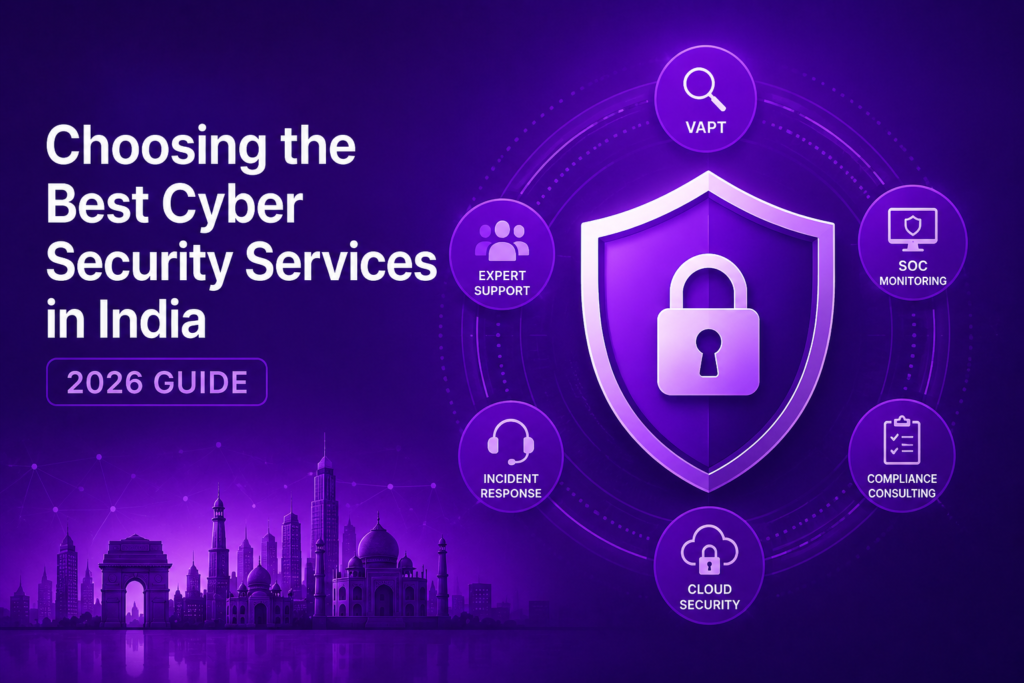
Best Cyber Security Services in India | 2026 Guide Cybersecurity Is No Longer an IT Problem It’s a Business Survival Issue For many organizations, cybersecurity only becomes a priority after an attack happens. A ransomware incident freezes operations. Customer data gets exposed. A phishing attack compromises executive credentials. An audit reveals major compliance gaps. The reality is simple: Cyberattacks are increasing in sophistication, speed, and financial impact. Whether you are a startup, enterprise, financial institution, SaaS company, healthcare provider, or manufacturing organization, choosing the right cybersecurity services provider in India has become a business-critical decision. But with hundreds of vendors claiming to be the “best,” how do you separate real cybersecurity expertise from marketing promises? This guide helps organizations understand what truly matters when selecting cyber security services in India in 2026. Quick Summary The best cyber security services in India should go beyond vulnerability scans and compliance checklists. Organizations should evaluate cybersecurity providers based on: Technical expertise Proactive threat detection Incident response capabilities Compliance understanding Industry experience Continuous security support Choosing the right partner can significantly reduce breach risks, downtime, and financial losses. Executive Summary for Business Leaders If your organization is evaluating cybersecurity services, focus on this: Do not choose based on: Lowest pricing Fancy dashboards Generic security reports Marketing claims Instead evaluate: Security expertise Real-world attack experience Compliance understanding Threat visibility Continuous monitoring capability Incident response readiness Industry-specific risk expertise The goal is not simply “buying cybersecurity.” The goal is: Reducing organizational cyber risk. Why Choosing the Right Cyber Security Provider Matters More in 2026 The threat landscape has changed dramatically. Organizations now face: AI-powered phishing attacks Supply chain compromises Cloud security misconfigurations Insider threats API exploitation Ransomware-as-a-Service (RaaS) Credential theft attacks Many businesses assume: “We have antivirus and a firewall, so we’re secure.” Unfortunately, attackers no longer rely on obvious attack paths. Modern attacks exploit: Misconfigured cloud environments Weak identity management Unsecured APIs Third-party vendors Privileged accounts This is why businesses increasingly rely on specialized cybersecurity providers. What Are Cyber Security Services? Cybersecurity services help organizations identify, prevent, detect, and respond to cyber threats. Common services include: 1. Vulnerability Assessment & Penetration Testing (VAPT) Identifies vulnerabilities before attackers exploit them. Includes: Web application testing Network penetration testing API security testing Mobile application security testing Cloud security testing Best for: Organizations wanting proactive risk reduction. 2. SOC as a Service (SOCaaS) Provides: 24/7 threat monitoring Incident detection Threat intelligence Security event analysis Best for: Organizations requiring continuous protection. 3. Compliance & Security Consulting Supports frameworks such as: ISO 27001 SOC 2 DPDP Act RBI Cybersecurity Guidelines PCI DSS GDPR Best for: Compliance-driven businesses. 4. Incident Response & Malware Analysis Helps organizations: Investigate breaches Contain attacks Recover operations faster Best for: Organizations facing cyber incidents. Hidden Mistakes Businesses Make While Choosing Cybersecurity Vendors At Lumiverse Solutions, one recurring issue we observe is that many organizations choose providers based solely on pricing or certifications. However, cybersecurity effectiveness depends heavily on execution quality and technical depth. Common Vendor Selection Mistakes Mistake Hidden Risk Choosing cheapest vendor Weak testing depth Compliance-only focus False sense of security Generic scan-based assessments Missed vulnerabilities No remediation support Risks remain unresolved No continuous monitoring Threats go unnoticed Cyber Security Vendor Evaluation Checklist Before selecting a cybersecurity partner, ask: Technical Capability Do they perform manual testing or only automated scans? Do they offer real attack simulations? Industry Expertise Have they worked in your sector? Compliance Readiness Can they support ISO 27001, SOC 2, DPDP, RBI? Incident Readiness Do they support incident response? Continuous Monitoring Do they offer SOC services? Reporting Quality Are reports actionable for technical and leadership teams? Decision Matrix: Choosing the Right Cyber Security Services Business Need Recommended Service Compliance readiness ISO 27001 / SOC 2 Consulting Web application risks WAPT Network exposure Network VAPT Continuous monitoring SOCaaS Breach investigation Incident Response Executive risk visibility Security Gap Assessment Business Impact of Choosing the Wrong Cybersecurity Provider Poor cybersecurity decisions can result in: Financial Losses Recovery, ransom, legal, and downtime costs. Compliance Mapping The best cybersecurity providers should support: ISO 27001 Security governance and controls. SOC 2 Security monitoring and trust principles. DPDP Act Personal data protection readiness. RBI Cybersecurity Framework Continuous monitoring and resilience. PCI DSS Payment security controls. Actionable Recommendations Before finalizing a cybersecurity provider: Step 1: Conduct a cybersecurity gap assessment. Step 2: Identify your biggest business risks. Step 3: Prioritize proactive security not reactive. Step 4: Evaluate technical depth, not just branding. Step 5: Choose a long-term cybersecurity partner. Protect Your Business Before Attackers Find the Gaps Cybersecurity is no longer just about prevention it is about resilience, visibility, and readiness. Book a Security Consultation At Lumiverse Solutions, we help organizations strengthen cybersecurity posture through VAPT, SOC as a Service, compliance consulting, cloud security, incident response, and proactive risk assessments tailored to business objectives. If you are unsure where your biggest risks exist, start with a cybersecurity gap assessment and identify vulnerabilities before attackers do. FAQs 1. Which is the best cyber security service in India? The best cybersecurity service depends on your business needs, risk profile, compliance requirements, and industry exposure. 2. What cybersecurity services should businesses prioritize? Most organizations should prioritize VAPT, SOC monitoring, compliance readiness, and incident response. 3. How much do cybersecurity services cost in India? Pricing depends on scope, assets, compliance requirements, and monitoring needs. 4. Why is VAPT important? VAPT helps identify vulnerabilities before attackers exploit them. 5. How do I choose the right cybersecurity company? Evaluate expertise, compliance knowledge, monitoring capabilities, incident response readiness, and reporting quality. Recent Posts May 28, 2026 Best Cyber Security Services in India | 2026 Guide May 26, 2026 Vulnerability Assessment vs Penetration Testing May 19, 2026 Active Directory Security Assessment: Hidden Misconfigurations That Put Organizations at Risk May 12, 2026 Patch Management: The Most Ignored Cybersecurity Risk That Leads to Data Breaches May 5, 2026 Endpoint Security & EDR Explained: Complete Guide to Protecting Devices from Cyber Threats April 28, 2026 How SOC as a Service Prevents

Best Cyber Security Services in India | 2026 Guide Read More »

Vulnerability Assessment vs Penetration Testing

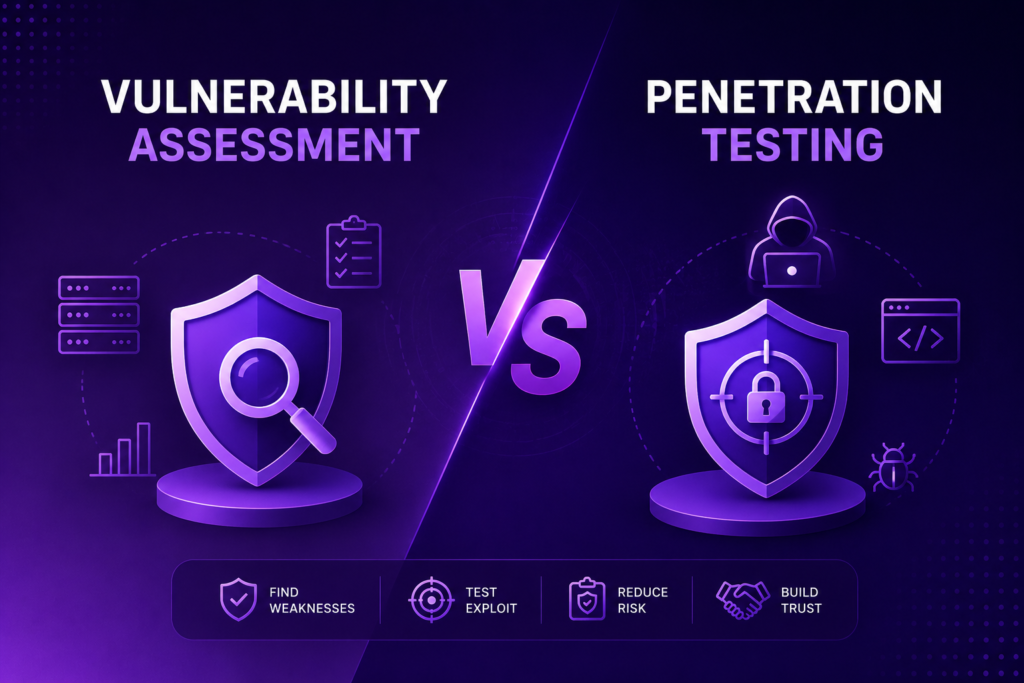
Vulnerability Assessment vs Penetration Testing Most Organizations Invest in Security Testing Yet Still Miss Critical Risks It’s a common trap in cybersecurity: running a vulnerability scan and assuming your systems are secure. But just because you scan doesn’t mean you’re protected. That kind of thinking leads to dangerous gaps in your security. At Lumiverse Solutions, we see it all the time. Companies put money and effort into cybersecurity assessments, yet they keep facing recurring vulnerabilities, compliance headaches, ransomware threats, and missed attack paths. Worst of all, the teams sometimes walk away with a false sense of security. So, what’s going wrong? A lot of organizations end up choosing the wrong kind of security assessment. The confusion usually starts with this question: “Do we need a Vulnerability Assessment or a Penetration Test?” If you’re a CISO, CTO, IT head, or part of the compliance team, the wrong answer wastes budget, leaves you exposed, and sometimes makes things worse. Here’s the truth: Vulnerability Assessment and Penetration Testing aren’t the same thing. Each tackles a different part of your security picture. If you want a mature cybersecurity strategy, you need to understand the difference. Quick Summary: Vulnerability Assessment vs Penetration Testing A Vulnerability Assessment (VA) searches your systems, apps, and infrastructure for known security holes. Penetration Testing (PT), on the other hand, means security pros actually try to break in—mimicking what an attacker would do to exploit those weaknesses. In plain English: Vulnerability Assessment = Finding weaknesses Penetration Testing = Proving weaknesses can be exploited VAPT = Both, for a clear and complete view Think about your organization. Are you: Getting ready for a compliance audit? Releasing new apps your customers will use? Managing sensitive personal data? Working in the cloud? Worried about ransomware or data breaches? If so, security testing isn’t just a checkbox. But picking the wrong approach leads to security gaps, wasted funds, failed audits, and maybe worst false confidence. To make the right call, look at your business needs, your level of risk, the rules you need to follow, and how complex your systems are. Why This Matters More in 2026 These days, cyberattacks aren’t just from masterminds or “elite hackers.” Attackers are everywhere, and they’re getting a lot more creative. They take advantage of: Misconfigurations Unpatched systems Weak authentication Flawed APIs Business logic mistakes The real problem? Too many organizations only spot vulnerabilities AFTER there’s a breach. We see it all the time companies put all their faith in automated scanning tools, convinced they’re fully covered. But those tools miss a lot. What do they typically miss? Authentication bypasses Ways to escalate privileges inside your systems Loopholes in real business workflows Attack chains that combine small issues into a big breach Manual penetration testing often uncovers these risks. What is a Vulnerability Assessment? A Vulnerability Assessment is a focused process designed to spot known weaknesses in your: Servers Applications Networks Endpoints APIs Cloud environments Put simply, you’re looking to find the holes before attackers do. Typical areas covered: Missing security patches Weak or risky configurations Out-of-date software Permissions set too loosely Known industry vulnerabilities (CVEs) Best for organizations that need: A broad view of where they stand To get ready for compliance Help prioritizing what to fix Ongoing monitoring and peace of mind Where Vulnerability Assessments Fall Short Basic vulnerability scans only tell you what’s wrong they don’t show you if a hacker could actually pull off an attack using those weaknesses. Example: A scanner says, “Authentication is weak.” But it might not show how a hacker could chain that flaw with others to get real access. When you need to know what’s actually possible, it’s time for Penetration Testing. What is Penetration Testing? Penetration Testing (a pentest) means security experts simulate real-world attacks to see if your IT weaknesses can actually be leveraged by hackers. Instead of checking boxes, testers think like bad actors taking your systems for a spin, probing for ways to get in and move around. In essence: it’s ethical hacking that shows you your actual business risk. What Penetration Testing Typically Reveals Manual pentesting usually uncovers things scanners simply miss, like: Ways to bypass authentication entirely Broken access controls (users seeing things they shouldn’t) Business logic flaws (when the flow of your app creates risks) API weaknesses that could be abused Escalation paths where someone gets more access than intended Lateral movement hackers hopping from system to system Vulnerability Assessment vs Penetration Testing: Key Differences Factor Vulnerability Assessment Penetration Testing Purpose Find vulnerabilities Exploit vulnerabilities Testing Type Automated & repeatable Manual, real-world attacks Depth Good surface coverage Much deeper, realistic checks Risk Validation Not confirmed Yes shows real-world impact Compliance Value Helps with checklists Stronger evidence, validation Business Risk Insight Just a start Deeper, more actionable Bottom line: VA tells you what could go wrong. PT proves whether it can actually happen. So… Which Assessment Do You Really Need? Here’s how to choose: Choose Vulnerability Assessment if: You need a wide-angle snapshot of risk You want ongoing, repeatable monitoring You’re focused on prioritizing fixes You’re prepping for compliance Choose Penetration Testing if: You’ve launched something new You’ve had security issues in the past You process or store sensitive data You need proof that issues are really exploitable Choose VAPT (The Best Bet) if: You want the full picture You need an enterprise-grade approach You must show auditors or clients you’re serious You want clear, actionable steps for IT and development teams For most midsize and large organizations, a combined VAPT approach works best it closes gaps and builds stronger trust. Why Organizations Choose the Wrong Assessment Common mistakes we see: Mistake 1: Thinking automated scans alone mean “secure.” Those reports do NOT replace human analysis. Mistake 2: Only testing after something goes wrong. Assessments are most valuable when they’re proactive don’t wait for an incident. Mistake 3: Overlooking business logic risks. It’s not just about patching servers your unique workflows can be a source of vulnerability. Mistake 4: Assuming compliance equals security.

Vulnerability Assessment vs Penetration Testing Read More »

Active Directory Security Assessment: Hidden Misconfigurations That Put Organizations at Risk

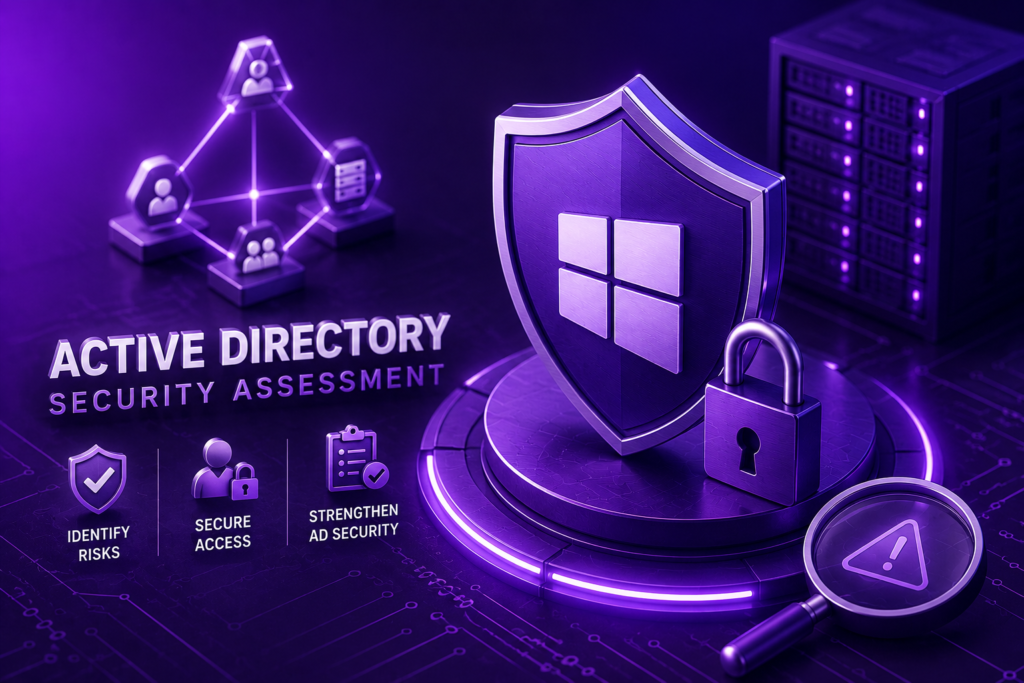
Active Directory Security Assessment: Hidden Misconfigurations That Put Organizations at Risk Most organizations invest in firewalls, antivirus, endpoint protection, and even advanced threat monitoring. Yet, one of the most critical systems in their infrastructure often remains overlooked: Active Directory (AD). For many businesses, Active Directory is the backbone of identity and access management. It controls: User authentication Access permissions Domain policies Privileged accounts Enterprise-wide access controls But here’s the problem: 👉 Attackers love Active Directory. Why? Because once compromised, it can provide access to an organization’s entire network, sensitive data, systems, and privileged accounts. The harsh reality is that many organizations unknowingly operate with misconfigured Active Directory environments, making them vulnerable to privilege escalation, ransomware, credential theft, and lateral movement attacks. This is where an Active Directory Security Assessment becomes essential. What is an Active Directory Security Assessment? An Active Directory Security Assessment is a cybersecurity evaluation that identifies vulnerabilities, misconfigurations, weak permissions, privilege escalation risks, and security gaps within an organization’s Active Directory environment. Why is Active Directory Security Important? Why do organizations need Active Directory security? Organizations need Active Directory security because AD manages authentication and permissions across systems, making it a high-value target for cybercriminals seeking unauthorized access to sensitive infrastructure. Think about it: If attackers gain control over Active Directory, they can potentially: Access sensitive files Escalate privileges Disable security controls Move laterally across systems Deploy ransomware organization-wide This makes Active Directory one of the most business-critical attack surfaces in enterprise environments. Why Cybercriminals Target Active Directory Active Directory is often called the “keys to the kingdom” in cybersecurity. According to the Microsoft Active Directory Security Best Practices, organizations should continuously monitor and secure privileged access paths to reduce identity-related cyber risks. Why? Because it stores: User credentials Group policies Access permissions Privileged accounts Domain administration settings Once attackers compromise AD, they can impersonate users and gain deeper access. Why do hackers target Active Directory? Hackers target Active Directory because it centralizes authentication, access permissions, and administrative privileges, making it one of the fastest ways to compromise an organization’s network. Real-World Example: How an AD Misconfiguration Leads to a Breach Imagine this scenario: An employee’s credentials are compromised through phishing. Because of weak Active Directory permissions: The attacker accesses a low-privilege account Exploits excessive permissions Moves laterally across systems Gains domain administrator access Deploys ransomware Result? Operational downtime Financial loss Compliance penalties Reputation damage All because of one hidden misconfiguration. Top Hidden Active Directory Misconfigurations That Put Organizations at Risk Most organizations don’t realize their Active Directory environment has security gaps. Here are the most common risks: 1. Excessive User Permissions Many organizations grant users more access than necessary. Risks: Unauthorized access Privilege abuse Insider threats Best Practice: Follow the principle of least privilege (PoLP). 2. Weak Password Policies Weak passwords remain one of the biggest AD vulnerabilities. Examples include: No password complexity Password reuse Weak expiration policies Best Practice: Implement: Strong password enforcement Multi-factor authentication (MFA) 3. Dormant or Unused Accounts Former employees or inactive accounts often remain enabled. Risks: Attackers exploit forgotten accounts. Best Practice: Regular account audits. 4. Privileged Account Mismanagement Too many domain admins = increased risk. Risks: Compromised privileged accounts lead to complete network takeover. Best Practice: Restrict privileged access. 5. Misconfigured Group Policies Poorly configured Group Policy Objects (GPOs) can weaken security. Risks: Reduced visibility Insecure configurations System vulnerabilities 6. Kerberos & Delegation Misconfigurations Attackers exploit Kerberos vulnerabilities to escalate privileges. Example attacks: Kerberoasting Golden Ticket attacks These attack techniques are commonly documented within the MITRE ATT&CK Framework, which maps real-world adversary behaviors and privilege escalation methods used by threat actors. 7. Lack of Monitoring & Logging Many organizations lack visibility into suspicious AD behavior. Without monitoring: Threats go undetected. Organizations implementing continuous monitoring through SOC as a Service solutions gain better visibility into identity-based attacks and suspicious authentication activity. What are common Active Directory vulnerabilities? Common Active Directory vulnerabilities include excessive permissions, weak password policies, inactive accounts, privileged access mismanagement, insecure Group Policies, and lack of monitoring. Active Directory Security Assessment vs Identity Access Management (IAM) This is a common confusion. Active Directory vs IAM Active Directory is a Microsoft-based directory service for authentication and access management, while IAM is a broader framework managing identities and access across systems, applications, and cloud environments. Active Directory IAM Microsoft-specific Broad framework On-prem identity Cloud + hybrid Authentication Governance + access 👉 Organizations often require both. How an Active Directory Security Assessment Works A proper assessment goes beyond basic scanning. 1. Discovery & Enumeration Security teams identify: Domains Users Privileged accounts Trust relationships 2. Permission Analysis Evaluating: Excessive permissions Delegation weaknesses Access risks 3. Misconfiguration Testing Checking: Weak Group Policies Password settings Kerberos vulnerabilities 4. Privilege Escalation Assessment Testing how attackers could gain admin access. Many organizations combine Active Directory assessments with VAPT Services to simulate real-world attack paths and identify exploitable weaknesses before cybercriminals do. 5. Security Reporting & Remediation Organizations receive: Risk report Severity analysis Fix recommendations How does an Active Directory security assessment work? An Active Directory security assessment identifies vulnerabilities, analyzes permissions, tests misconfigurations, evaluates privilege escalation risks, and provides remediation guidance. Signs Your Organization Needs an Active Directory Security Assessment You should strongly consider an assessment if: You haven’t audited AD in 12+ months You have hybrid or remote work environments Employees recently left the organization You manage privileged accounts manually You experienced phishing attempts If your organization uses Active Directory, security assessments should not be optional. Businesses also conducting broader Cybersecurity Risk Assessment exercises often identify identity security gaps that originate from poorly managed Active Directory environments. How Much Does an Active Directory Security Assessment Cost? What affects AD security assessment pricing? The cost of an Active Directory security assessment depends on the number of users, domains, infrastructure complexity, privileged accounts, and testing scope. Typical pricing factors include: Number of endpoints Multiple domains Hybrid cloud integration Compliance requirements Assessment depth Organizations searching for Active Directory security assessment services in Mumbai, Pune, Nashik, Bangalore, or across

Active Directory Security Assessment: Hidden Misconfigurations That Put Organizations at Risk Read More »

Patch Management: The Most Ignored Cybersecurity Risk That Leads to Data Breaches

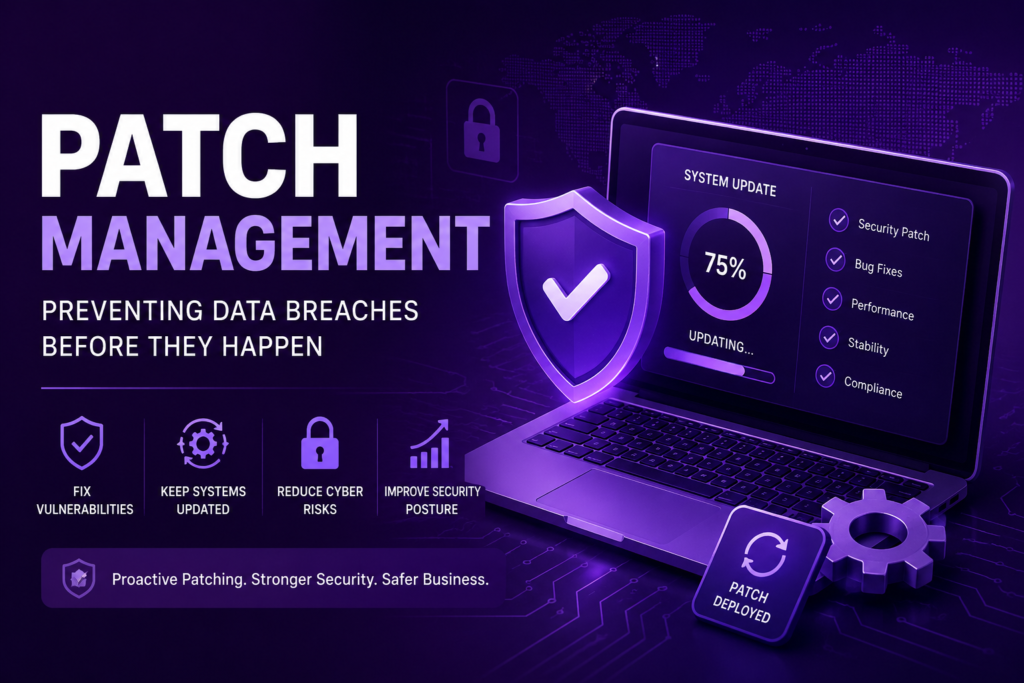
Patch Management: The Most Ignored Cybersecurity Risk That Leads to Data Breaches Most cyberattacks do not begin with sophisticated hacking. They begin with something much simpler: 👉 An unpatched vulnerability. Organizations invest heavily in firewalls, antivirus, endpoint security, and compliance frameworks but often ignore one of the most fundamental cybersecurity practices: patch management. A delayed software update, outdated operating system, or forgotten application patch can become an open door for cybercriminals. In today’s threat landscape, attackers actively scan systems for known vulnerabilities, especially those organizations that delay updates. The question is no longer: “Should businesses patch systems?” It is: “How quickly can businesses patch vulnerabilities before attackers exploit them?” This is where patch management services become a critical component of modern cybersecurity. What is Patch Management? Patch management is the process of identifying, testing, deploying, and monitoring software updates (patches) to fix vulnerabilities, improve performance, and secure systems against cyber threats. Why is Patch Management Important? Patch management is necessary because outdated systems contain known vulnerabilities that cybercriminals can exploit to gain unauthorized access, deploy ransomware, steal data, or disrupt business operations. Think about it this way: Every software vendor whether it’s Microsoft, Linux, VMware, Adobe, or enterprise applications regularly releases updates. These updates are not just about new features. Most patches fix: Security vulnerabilities Software bugs System performance issues Compliance gaps Failing to install them creates unnecessary risk. How Cybercriminals Exploit Unpatched Systems Hackers don’t always “hack” systems in the traditional sense. Sometimes they simply exploit vulnerabilities that organizations already know about but failed to fix. Example: A critical security vulnerability gets publicly disclosed. Within hours: Attackers create exploit scripts Automated bots scan the internet Vulnerable systems are identified Breaches happen This means organizations delaying updates even for a few days can become easy targets. Real-World Example: The Cost of Delayed Patching One of the biggest ransomware outbreaks globally spread because organizations failed to apply a publicly available security update. Despite patches being released months earlier, many systems remained exposed. The result? Massive operational downtime Financial losses Data breaches Reputational damage Can poor patch management lead to data breaches? Yes. Poor patch management is one of the leading causes of cybersecurity incidents because attackers commonly exploit known vulnerabilities in outdated systems and software. Common Risks of Poor Patch Management Organizations with weak patching practices often face: 🛑 Ransomware Attacks Unpatched vulnerabilities are one of ransomware’s favorite entry points. 🔓 Unauthorized Access Attackers exploit weak systems to gain administrator-level access. 📂 Data Breaches Sensitive business and customer data becomes exposed to cybercriminals. ⚖️ Compliance Violations Weak patching practices may lead to non-compliance with: ISO 27001 DPDP HIPAA GDPR ⏱️ Operational Downtime Security incidents and outages disrupt productivity and business continuity. Patch Management vs Vulnerability Management: What’s the Difference? This is one of the most common questions organizations ask. Patch management vs vulnerability management Patch management focuses on deploying software updates to fix vulnerabilities, while vulnerability management identifies, assesses, and prioritizes security weaknesses across systems. Think of it this way: Patch Management Vulnerability Management Fixes vulnerabilities Finds vulnerabilities Software updates Risk assessment Reactive implementation Proactive identification 👉 Strong cybersecurity requires both. What Does an Effective Patch Management Process Look Like? A mature patching strategy includes several stages. STEP 01 Asset Discovery Identify devices, servers, applications, cloud workloads, and endpoints. Devices Servers Applications Cloud Workloads Endpoints STEP 02 Vulnerability Identification Analyze missing patches, critical CVEs, and high-risk software versions. Missing Patches Critical CVEs High-Risk Versions STEP 03 Patch Testing Updates are validated before deployment to avoid operational disruption. STEP 04 Deployment Roll out patches systematically across enterprise infrastructure. Endpoints Servers Cloud Enterprise Apps STEP 05 Monitoring & Reporting Continuously monitor deployment success, remediation status, and emerging vulnerabilities. Successful Deployment Patch Remediation New Vulnerabilities How does patch management work? Patch management works by identifying vulnerable systems, testing updates, deploying security patches, and continuously monitoring environments to reduce cybersecurity risks. Common Patch Management Mistakes Businesses Make Many organizations unintentionally expose themselves because of poor patching habits. 1. Delaying Critical Updates Waiting weeks or months increases exposure. 2. No Centralized Visibility IT teams lack visibility into missing patches. 3. Manual Patch Deployment Manual patching increases human error. 4. Ignoring Third-Party Software Many breaches originate from: Browsers Plugins Productivity apps 5. No Testing Process Poorly tested patches can disrupt operations. Who Needs Patch Management Services? Which organizations need patch management? Any organization using connected devices, software, cloud infrastructure, or enterprise systems requires patch management to reduce cybersecurity risks. Industries that benefit the most: Healthcare Finance Manufacturing SaaS companies Government organizations E-commerce businesses In reality: If your business uses technology you need patching. How to Choose the Right Patch Management Service Provider Organizations planning to hire a managed patch management service provider should evaluate several factors. Look for: Automated patch deployment Vulnerability prioritization Endpoint visibility Integration with SOC monitoring Compliance reporting Real-time dashboards Businesses searching for managed patch management services in Mumbai, Nashik, Pune, Bangalore, or across India increasingly prefer providers that combine patching + continuous security monitoring. What Affects Patch Management Costs? Patch management pricing depends on the number of endpoints, infrastructure complexity, cloud environments, monitoring requirements, and compliance obligations. Key cost factors include: Number of devices Hybrid or cloud infrastructure Automation requirements Third-party software coverage Security monitoring integration Instead of treating patching as an expense, organizations should view it as a risk reduction investment. One prevented breach often saves significantly more than patching costs. Best Practices for Effective Patch Management Automate updates wherever possible Prioritize critical vulnerabilities Conduct regular vulnerability assessments Maintain an updated asset inventory Integrate patching with endpoint security and SOC monitoring Additional best practices: Adopt a risk-based patching approach Create patch deployment schedules Continuously monitor systems Test patches before deployment How Lumiverse Solutions Helps Organizations Stay Secure At Lumiverse Solutions, we help businesses proactively reduce cybersecurity risks through managed patch management services, vulnerability remediation, and continuous monitoring. Our Approach Includes: Patch risk assessment Endpoint & server patch management Vulnerability prioritization Automated deployment strategies SOC-integrated monitoring Compliance-ready reporting Whether you need support

Patch Management: The Most Ignored Cybersecurity Risk That Leads to Data Breaches Read More »

EDR explained

Endpoint Security & EDR Explained: Complete Guide to Protecting Devices from Cyber Threats

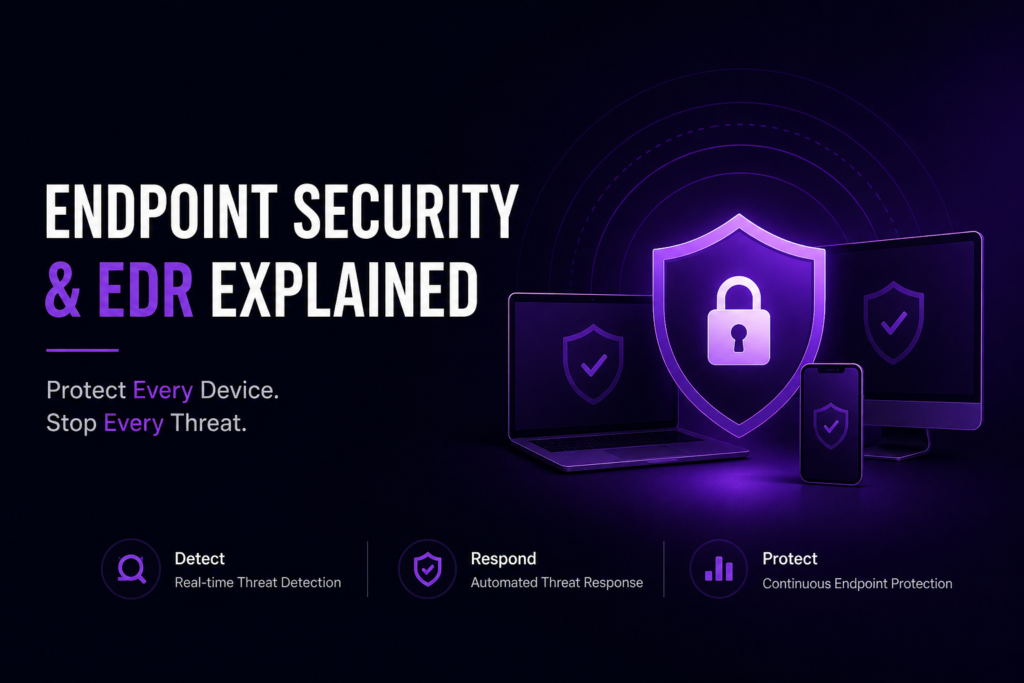
Endpoint Security & EDR Explained: Complete Guide to Protecting Devices from Cyber Threats Introduction: Your Biggest Security Risk is Sitting on Your Desk Every laptop, mobile device, server, or workstation connected to your network is an endpoint. Now imagine this: One compromised laptop = access to your entire system In today’s hybrid and remote work environment, endpoints have become the primary entry point for cyberattacks such as ransomware, phishing, and malware. Traditional antivirus is no longer enough. This is where Endpoint Security and EDR (Endpoint Detection & Response) play a critical role in protecting organizations from modern cyber threats. What is Endpoint Security? Endpoint security is a cybersecurity approach that protects devices like laptops, desktops, mobile devices, and servers from cyber threats using tools such as antivirus, EDR, encryption, and access control systems. What is EDR in Cybersecurity? EDR (Endpoint Detection and Response) is an advanced security solution that continuously monitors endpoint activities, detects suspicious behavior, and responds to threats in real time. Why Endpoint Security is Critical for Businesses Today 💡 Why is endpoint security important? Endpoint security is important because endpoints are the most common attack vectors, and a single compromised device can lead to data breaches, ransomware attacks, and system-wide compromise. Key Risks Without Endpoint Security: Unauthorized access to company data Ransomware attacks Phishing-based breaches Insider threats Data leakage According to industry reports, over 70% of breaches start at endpoints Endpoint Security vs Antivirus: What’s the Difference? 💡 EDR vs antivirus Antivirus detects known threats using signatures, while EDR provides real-time monitoring, behavioral analysis, and advanced threat detection to stop modern attacks. Feature Antivirus EDR Detection Signature-based Behavior-based Threat Response Limited Advanced Monitoring No Continuous Protection Level Basic Advanced Antivirus = basic protection EDR = complete security solution Common Endpoint Attacks You Must Know 1. Phishing AttacksEmployees click malicious links → attackers gain access 2. RansomwareFiles get encrypted → attackers demand payment 3. Malware & TrojansHidden programs steal data or control systems 4. Insider ThreatsEmployees misuse access (intentional or accidental) 5. Unpatched VulnerabilitiesOutdated systems become easy targets How EDR Protects Your Organization 💡 How does EDR work? EDR continuously monitors endpoint behavior, detects anomalies, investigates threats, and automatically responds to prevent attacks from spreading. Key Capabilities: 1. Continuous Monitoring – Tracks every activity on endpoints 2. Behavioral Analysis – Detects unusual patterns 3. Threat Detection – Identifies suspicious activity 4. Automated Response – Isolates infected devices & blocks attacks 5. Forensic Analysis – Understands how attacks happened Real-World Example: Endpoint Attack Scenario Without Endpoint Security Employee clicks phishing email Malware installs silently Data gets exfiltrated Breach discovered after days With EDR Suspicious activity detected instantly Endpoint isolated Attack stopped No data loss Damage prevented in real-time Best Practices for Endpoint Security Implement EDR solutions Regularly update and patch systems Enforce strong access controls Train employees Monitor endpoints continuously Practical Strategies: Use multi-factor authentication (MFA) Apply Zero Trust security model Enable device encryption Restrict admin access Deploy patch management system Endpoint Security Tools & Technologies Microsoft Defender for Endpoint CrowdStrike Falcon SentinelOne Buying Guide: How to Choose the Best Endpoint Security Solution 💡 How to choose endpoint security? Real-time threat detection AI/ML capabilities Scalability Integration with SOC Compliance support Who Needs Endpoint Security the Most? Startups & SaaS companies Enterprises with remote teams Healthcare organizations Financial institutions E-commerce businesses If you have devices connected to your network you need endpoint security. How Lumiverse Solutions Secures Your Endpoints At Lumiverse Solutions, we provide end-to-end endpoint security and EDR solutions tailored to modern businesses. Endpoint risk assessment EDR implementation & monitoring Patch management Threat detection & response 24/7 security monitoring (SOC integration) Take the Next Step with Lumiverse Solutions Don’t let one compromised device bring down your entire organization. Get your Endpoint Security Assessment today FAQs 1. What is endpoint security? Endpoint security protects devices like laptops and servers from cyber threats. 2. What is EDR? EDR detects and responds to threats in real time. 3. Why is antivirus not enough? It only detects known threats, not modern attacks. 4. How does endpoint security prevent attacks? It monitors, detects, and blocks threats early. 5. Is endpoint security necessary for small businesses? Yes, small businesses are frequent targets. Conclusion: Every Device is a Security Gateway Your cybersecurity is only as strong as your weakest endpoint. The solution is clear: Implement advanced endpoint security with EDR. Lumiverse Solutions — Protecting Every Device, Securing Every Business. Recent Posts May 28, 2026 Best Cyber Security Services in India | 2026 Guide May 26, 2026 Vulnerability Assessment vs Penetration Testing May 19, 2026 Active Directory Security Assessment: Hidden Misconfigurations That Put Organizations at Risk May 12, 2026 Patch Management: The Most Ignored Cybersecurity Risk That Leads to Data Breaches May 5, 2026 Endpoint Security & EDR Explained: Complete Guide to Protecting Devices from Cyber Threats April 28, 2026 How SOC as a Service Prevents Cyber Attacks Before They Happen April 22, 2026 API Security Testing: Complete Guide to Vulnerabilities, Risks & Best Practices for Secure Applications April 14, 2026 ISO 27001:2022 Explained – ISMS Guide, Certification, Cost & Benefits (2026) April 7, 2026 DPDP Act 2023 Compliance for Organizations: Step-by-Step Guide, Importance, Penalties & Implementation Roadmap March 31, 2026 The Growing Importance of Robot Penetration Testing in Automated Industries Categories Cyber Security Security Operations Center Cloud Security Case Study Technology Trends Don’t Let Cyber Risks Disrupt Your Business Growth Certified Cybersecurity & Compliance Experts: 12+ years of industry experience delivering VAPT, ISO 27001, SOC 2, and regulatory compliance aligned with global standards. Proven Real-World Cyber Expertise: 850+ cybercrime cases investigated and 1500+ cybersecurity audits conducted across enterprises and regulated industries. Strengthening People, Processes & Technology: 4500+ cybersecurity awareness sessions delivered to reduce human-layer risks and improve organizational cybersecurity. End-to-End Security Partner: From advanced penetration testing to global compliance frameworks, Lumiverse Solutions ensuring businesses stay secure, compliant, and confidently future-ready. Secure. Comply. Scale with Confidence. Book Your free Consultation → India: +91 77986 60940 / +91 7397 882 579 UAE: +971 58 585 6233

Endpoint Security & EDR Explained: Complete Guide to Protecting Devices from Cyber Threats Read More »

SOC as a service shield with lock

How SOC as a Service Prevents Cyber Attacks Before They Happen

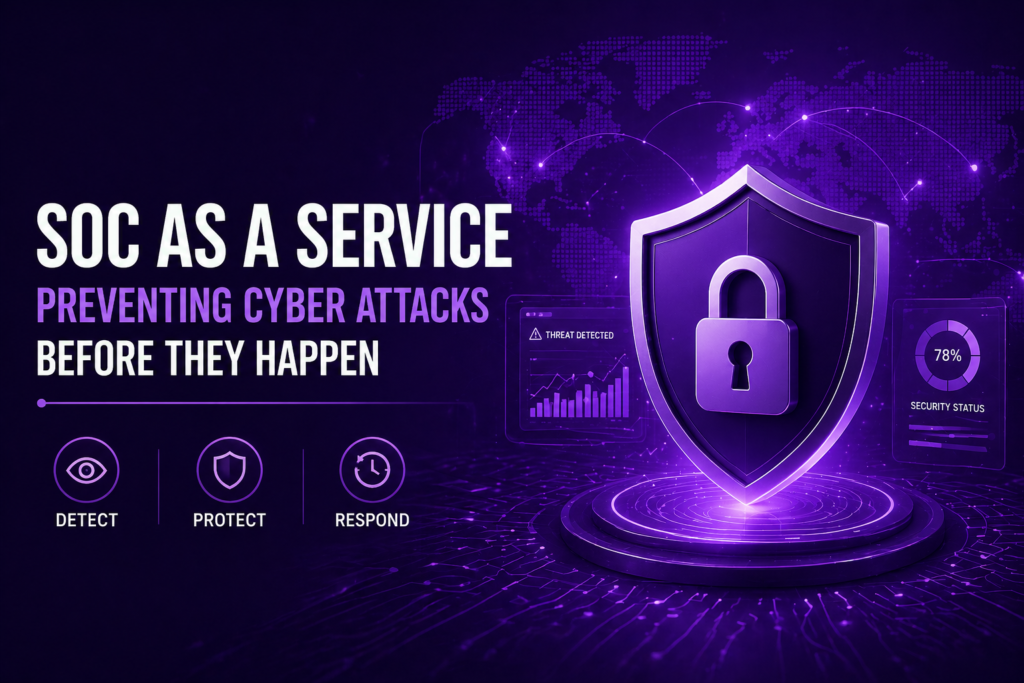
How SOC as a Service Prevents Cyber Attacks Before They Happen Cybersecurity • SOC as a Service • 2026 Most cyberattacks begin long before businesses notice them. Attackers silently exploit weak credentials, vulnerabilities, cloud misconfigurations, or unmonitored systems for weeks or months. Traditional security tools alone are no longer enough. Modern organizations now require continuous monitoring, rapid response, and proactive threat detection. 💡 What is SOC as a Service (SOCaaS)? SOCaaS is a managed cybersecurity solution that provides 24/7 threat monitoring, detection, incident response, and security expertise without building an in-house SOC team. Why SOCaaS Matters in 2026 Cyber threats have evolved rapidly with AI-powered phishing, ransomware, insider threats, and cloud-based attacks becoming more advanced. AI-driven phishing campaigns Credential compromise attacks Cloud security risks Supply chain vulnerabilities Fileless malware & stealth attacks Businesses relying only on firewalls or antivirus software often lack real-time visibility into ongoing threats. How SOC as a Service Prevents Cyber Attacks 1. Continuous 24/7 Monitoring 💡 Why continuous monitoring matters? Cyberattacks can happen anytime. SOC teams monitor systems, endpoints, users, and networks around the clock to detect suspicious activity instantly. Real-time visibility across infrastructure Monitoring beyond office hours Immediate detection of anomalies 2. Early Threat Detection SOCaaS identifies unusual activity during the early stages of an attack lifecycle. Login anomalies Privilege escalation attempts Suspicious network behavior Endpoint compromise indicators 👉 Early detection reduces business impact significantly. 3. Faster Incident Response 💡 What happens after a threat is detected? SOC analysts investigate alerts, isolate affected systems, block malicious activity, and support containment before damage escalates. Rapid threat containment Reduced downtime Minimized operational disruption 4. Proactive Threat Hunting Instead of waiting for alerts, SOC experts actively search for hidden threats and suspicious patterns. Advanced persistent threats (APTs) Insider threats Lateral movement detection Persistence mechanisms 5. Threat Intelligence Integration 💡 What is threat intelligence? Threat intelligence uses real-world attack data and emerging threat insights to strengthen detection and improve proactive defense strategies. Identify known attack patterns Track emerging cyber threats Improve response accuracy Common Security Gaps Businesses Overlook Many organizations deploy multiple security tools but fail to monitor alerts effectively. Common Mistake Business Risk No 24/7 monitoring Delayed breach detection Unmonitored alerts Missed incidents Weak incident response Longer downtime Limited visibility Hidden attacker activity SOCaaS vs In-House SOC Factor SOCaaS In-House SOC Cost Lower Very High 24/7 Monitoring Included Expensive Expertise Built-in Requires Hiring Scalability Flexible Complex Key Benefits of SOCaaS 💡 Main benefits of SOC as a Service SOCaaS improves visibility, reduces response time, strengthens compliance, and provides enterprise-grade cybersecurity without heavy infrastructure investment. 24/7 cybersecurity protection Reduced attacker dwell time Faster threat detection Compliance support Access to cybersecurity experts Compliance & Governance Support SOCaaS helps organizations strengthen compliance readiness for: ISO 27001 SOC 2 PCI DSS DPDP Act GDPR & RBI guidelines How Lumiverse Solutions Helps At Lumiverse Solutions, we help organizations improve cyber resilience through: 24/7 threat monitoring Incident response support Threat intelligence integration Security gap assessments Proactive cybersecurity monitoring Strengthen Your Cyber Defense Detect threats before they turn into business disruptions. Get Your Free Consultation Today FAQs What is SOC as a Service? SOCaaS is a managed cybersecurity service providing 24/7 monitoring, threat detection, and incident response. How does SOCaaS prevent cyber attacks? It continuously monitors systems, detects suspicious activity early, and enables faster incident response. Is SOCaaS suitable for small and mid-sized businesses? Yes. SOCaaS is scalable and cost-effective for businesses of all sizes. Does SOCaaS support compliance? Yes. It supports frameworks like ISO 27001, SOC 2, PCI DSS, DPDP, and GDPR. Why is continuous monitoring important? Continuous monitoring helps detect threats before attackers cause major operational or financial damage. Recent Posts May 26, 2026 Vulnerability Assessment vs Penetration Testing May 19, 2026 Active Directory Security Assessment: Hidden Misconfigurations That Put Organizations at Risk May 12, 2026 Patch Management: The Most Ignored Cybersecurity Risk That Leads to Data Breaches May 5, 2026 Endpoint Security & EDR Explained: Complete Guide to Protecting Devices from Cyber Threats April 28, 2026 How SOC as a Service Prevents Cyber Attacks Before They Happen April 22, 2026 API Security Testing: Complete Guide to Vulnerabilities, Risks & Best Practices for Secure Applications April 14, 2026 ISO 27001:2022 Explained – ISMS Guide, Certification, Cost & Benefits (2026) April 7, 2026 DPDP Act 2023 Compliance for Organizations: Step-by-Step Guide, Importance, Penalties & Implementation Roadmap March 31, 2026 The Growing Importance of Robot Penetration Testing in Automated Industries March 24, 2026 What is a Cloud Security Assessment and Why Does Your Business Need One? Categories Cyber Security Security Operations Center Cloud Security Case Study Technology Trends Don’t Let Cyber Risks Disrupt Your Business Growth Certified Cybersecurity & Compliance Experts: 12+ years of industry experience delivering VAPT, ISO 27001, SOC 2, and regulatory compliance aligned with global standards. Proven Real-World Cyber Expertise: 850+ cybercrime cases investigated and 1500+ cybersecurity audits conducted across enterprises and regulated industries. Strengthening People, Processes & Technology: 4500+ cybersecurity awareness sessions delivered to reduce human-layer risks and improve organizational cybersecurity. End-to-End Security Partner: From advanced penetration testing to global compliance frameworks, Lumiverse Solutions ensuring businesses stay secure, compliant, and confidently future-ready. Secure. Comply. Scale with Confidence. Book Your free Consultation → India: +91 77986 60940 / +91 7397 882 579 UAE: +971 58 585 6233

How SOC as a Service Prevents Cyber Attacks Before They Happen Read More »